September 2, 2026 · 2 min read
How to Choose Your First Dive Mask
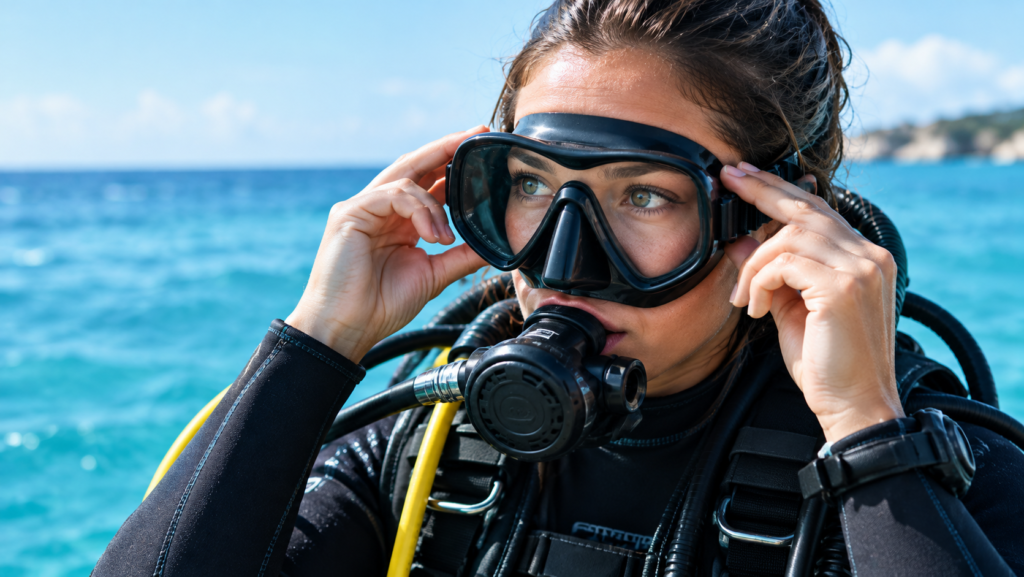
Your mask is the one piece of gear you look through for every minute of every dive. Get it right and you forget it is there. Get it wrong and you spend the dive clearing water and fighting fog. Unlike fins or a BCD, mask fit is personal to your face, so the best mask is simply the one that seals on you.
Start with the fit test
Before you look at colours or price, do the suction test. Hold the mask against your face without the strap, breathe in gently through your nose, and let go. A mask that fits will stay in place by suction alone for a few seconds. If air hisses in around the edge, the skirt does not match your face shape.
- Check the skirt follows your cheekbones without gaps.
- Make sure your moustache or stubble is not breaking the seal on the upper lip. A little silicone grease can help, but a better-fitting skirt is the real fix.
- Look straight ahead and down: the frame should not press on your brow or nose bridge.
Low volume vs standard volume
Low-volume masks sit close to the face. They are easier to clear, need less air to equalise, and are popular with freedivers and anyone who dislikes feeling boxed in. Standard-volume masks give a wider field of view and can feel less claustrophobic. If you are new to diving, a mid-range low-volume mask is a comfortable starting point.
Lens choices
- Clear lenses give the most natural colour and brightness. They are the safe default.
- Mirrored or tinted lenses cut glare in bright shallow water but can make a mask feel darker at depth or in green water.
- Prescription lenses are available as bonded inserts or ready-made corrective lenses in set strengths. If you wear glasses, this is worth the investment.
Skirt and strap
Silicone skirts are standard. Clear silicone lets in more light; black silicone cuts glare and is favoured by photographers. A wide, split strap holds better than a thin single band, and a neoprene strap cover keeps hair from tangling.
Prepare a new mask before its first dive
New masks carry a thin film of manufacturing residue that makes them fog. Follow the manufacturer’s instructions to clean the inside of the lenses before use, then use a dedicated anti-fog solution or a small drop of baby shampoo, rinse lightly, and you are ready.
Common first-time mistakes
- Choosing on looks and skipping the suction test.
- Buying the cheapest option without checking the skirt quality.
- Wearing the strap too tight. A good seal comes from fit, not pressure.
Not sure which size or shape suits you? Ask our team, or browse the full range in Masks, Fins & Snorkels.